
Your Brain on Wood: Why Making Things Matters More Than You Think
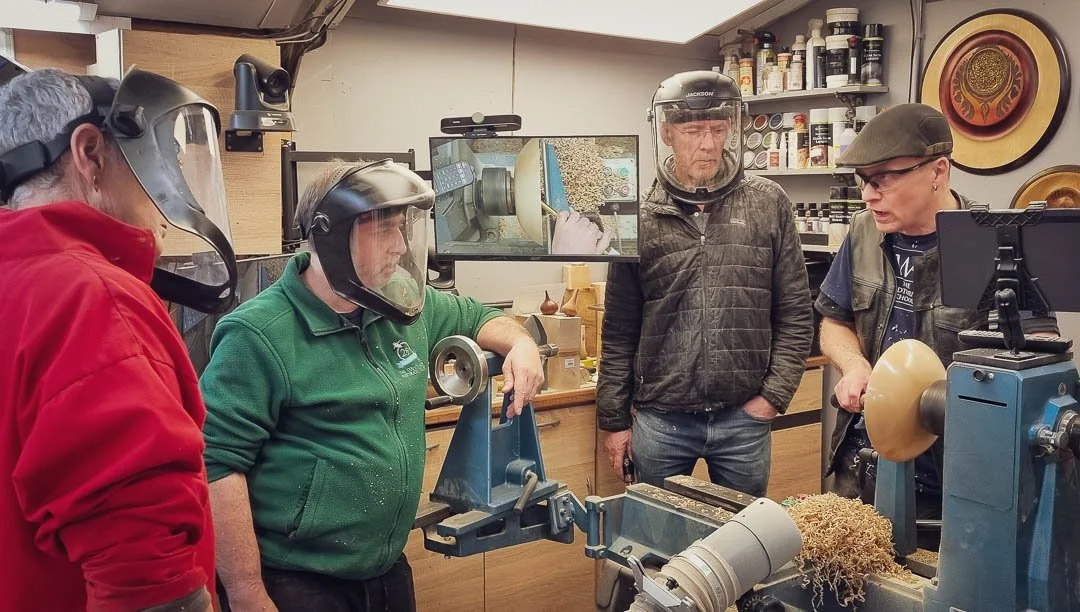
I've spent over a decade at the lathe. People sometimes ask what keeps me coming back, why I'm still as engaged now as I was on day one. The easy answer is that I love making things. Not least because it’s my job! But the fuller answer involves what's happening in my brain while I work.
Recent research has confirmed something I've felt but couldn't quite articulate: hands-on making isn't just enjoyable. It's fundamentally good for how our minds work.
The Number That Made Me Pay Attention
A Mayo Clinic study tracked people from middle age through their 80s, noting who did hands-on crafts — woodworking, pottery, sewing — and who didn't. The result stopped me cold: people who did crafts were 45% less likely to develop cognitive problems as they aged.
Forty-five percent isn't a modest improvement. That's substantial protection.
Even those who started in their 70s saw a 28% reduction. But people who'd been making things since midlife? Nearly half the risk of memory and thinking decline.
This matters because it suggests something I've suspected: the work we do with our hands shapes not just what we make, but who we become.
What Happens While You're Making
Stand at a lathe for an hour and you're exercising your brain in ways most daily activities don't touch.
Hand-Eye Coordination at High Stakes
Every cut demands precision. The tool angle must be accurate or you mat get yourself a catch instead of clean shavings, for example. This constant calibration isn't just mechanical. It's your brain building and strengthening connections between what you see, what you intend, and what your hands execute.
Thinking in Space
You're holding a shape in your mind that doesn't exist yet. You're visualising what's hidden on the back side of a spinning piece. You're planning cuts that will reveal form from formlessness. This exercises spatial thinking in ways that sitting at a desk or doom scrolling a screen simply doesn't.
Real-Time Problem-Solving
Wood never cooperates completely. Grain reverses direction. Hidden flaws appear. The blank isn't quite true. Each piece presents unique challenges requiring immediate response. You read, assess, and adapt while the lathe keeps spinning. This active problem-solving keeps your mind sharp in ways that passive consumption can't match.
The Disappearing World
When turning goes well, time stops existing. You look up and an hour has passed in what felt like minutes. Psychologists call this "flow": The complete absorption where self-consciousness disappears and you're just doing. Research shows this state reduces stress hormones, quiets the critical voice, and creates conditions where learning happens naturally.
I've noticed this in my own practice: the sessions where I lose track of time are the ones I remember most clearly afterwards.
The Two-Hand Advantage
Scientists have found something interesting about activities requiring both hands to work differently but together, especially when they cross the body's midline.
Turning is precisely this.
One hand steadies and positions. The other guides and adjusts angle. They're in constant communication through micro-adjustments happening below conscious thought, responding to what you're feeling through the tool.
This bilateral coordination keeps both brain hemispheres engaged and strengthens the connections between them. As we age, those connections naturally weaken. Making work that requires both hands in conversation slows that decline.
Creative Practice and Brain Age
Recent research measured how "old" people's brains appeared functionally compared to their chronological age. They studied dancers, musicians, visual artists and people engaged in creative practice.
The finding: regular creative work is associated with functionally younger brains. The more skilled and practiced the person, the stronger the effect.
Woodturning sits in this category. It demands planning, spatial reasoning, problem-solving, fine motor control, and creativity, operating simultaneously. That combination exercises multiple brain systems at once.
I think about this when I'm teaching at The Woodturning School. Students aren't just learning to turn bowls. They're engaging their minds in the kind of complex, multi-system work that keeps brains healthy.
Making Things Feels Good Because It Is Good
There's a reason finishing a piece feels satisfying in a way that's hard to articulate. Hands-on work creating something tangible triggers dopamine (your brain's reward chemical). This is your brain recognising and reinforcing beneficial activity.
The journey from rough wood to finished form creates a feedback loop in your brain that reduces stress and improves mood. This is why I can have a frustrating day and still leave the workshop feeling better than when I entered.
Learning Together
While turning can be solitary, learning happens socially. Classes involve watching, asking, receiving feedback, helping others work through challenges. This social dimension exercises different brain systems than the physical work alone.
Research consistently shows that social connection protects against cognitive decline. Isolation accelerates it. The maker communities we build, whether in workshops, at shows, or through online platforms like Facebook groups or my Woodturning360 club provides brain benefits beyond the craft itself.
The Meditative State
Many turners describe the work as meditative, and brain research backs this up. Focused attention, rhythmic motion, and tactile feedback activate your body's relaxation response.
These focused, low-stress activities measurably reduce inflammation, lower stress hormones, and improve emotional regulation. The concentrated absorption of making provides mental health benefits that compound with the cognitive ones.
Your Brain Doesn't Stop Developing
Perhaps the most encouraging finding from recent neuroscience: your brain stays capable of learning and adapting throughout life.
Yes, some functions naturally slow with age. But others (particularly those you actively use) can be maintained or improved. The brain is more adaptive than we thought. Use it or lose it applies.
Woodturning uses it consistently and comprehensively.
Every session strengthens existing skills, develops new ones, keeps your brain flexible, and builds a buffer against decline. This buffer that researchers call "cognitive reserve" explains why some people stay mentally sharp despite physical brain changes from aging.
You build this reserve through exactly what making provides: complex coordination, problem-solving, spatial thinking, creativity, continuous learning.
What This Means
If you already make things with your hands, you're doing something genuinely beneficial for your brain.
If you're considering starting, here's what matters:
Begin now. The research shows benefits at any age, though starting earlier compounds the effect. Don't wait until you feel "ready." You won't.
Practice regularly. Weekly sessions build brain connections better than occasional marathons. Consistency over intensity.
Keep challenging yourself. Don't just repeat comfortable patterns. New techniques, unfamiliar forms, difficult problems that provide more brain benefit than repetition.
Value the process. The cognitive benefits come from the doing, not the finished piece. Mistakes are learning opportunities, which means brain development opportunities.
Make it social when possible. Classes, workshops, maker groups — these add cognitive benefits beyond solitary practice.
The Longer View
In "A Maker's Mindset," (to be published in June), I write about craft as a practice rather than a project. This distinction matters here.
The Mayo Clinic participants showing 45% reduced cognitive risk weren't people who took one class. They were people who made hands-on work a regular part of life over years. The protection came from sustained practice, not brief intervention.
What We've Lost and Can Reclaim
There's something profound about the fact that the activities most beneficial for brain health are what humans have done for millennia. Our brains evolved making things with our hands. We're built for this work.
Most of us have lost connection with that in our screen-heavy, abstract-labour modern world. We've outsourced making to machines and specialists. We consume rather than create.
Woodturning — or any hands-on making — offers a way back. Not as nostalgia or rejection of modernity, but as reclaiming something essential about how human minds work best.
When I'm at the lathe, tool in hand, wood spinning, I'm not just making a bowl. I'm engaging my brain in the complex, demanding, creative work it was designed for over thousands of years of evolution.
The cognitive benefits aren't incidental. They're inherent to the activity.
Research Referenced:
Mayo Clinic Study of Aging - Roberts RO, et al. "Risk and protective factors for cognitive impairment in persons aged 85 years and older." Neurology, April 2015. Available at: https://www.aan.com/PressRoom/Home/PressRelease/1363Brzezicka, A., et al. "Creative experiences and brain clocks." Nature Communications, October 2025. https://www.nature.com/articles/s41467-025-64173-9Buchman AS, et al. "Physical activity, common brain pathologies, and cognition in community-dwelling older adults." Neurology, February 2019. https://www.nia.nih.gov/news/physical-activity-and-motor-ability-associated-better-cognition-older-adults-even-dementiaComprehensive assessment of fine motor movement and cognitive function among older adults - BMC Geriatrics, January 2024. https://bmcgeriatr.biomedcentral.com/articles/10.1186/s12877-024-04725-8Lambert, K. (University of Richmond) on behavioural interventions and brain chemistry - "Behavioraceuticals" researchCsikszentmihalyi, M. Flow research and cognitive benefits of absorbed attention. TED talk, 2004.Levisay, C.C. (Clinical Neuropsychologist). "This is your brain on crafting." CNN Health, March 2014. https://www.cnn.com/2014/03/25/health/brain-crafting-benefits