

Woodturning Books
From a Woodturning Design Book to a Maker Philosophy Book
I've written two books, and they're quite different from each other. One is about what to do at the lathe. The other is about what the lathe does to you.
Both came from the same place: a decade of turning, teaching, and noticing things. Neither is a manual in the conventional sense. They're more like long conversations that happen to be bound in covers.
Woodturning: Form and Formula
Some turned pieces feel instantly right. The proportions settle, the eye moves easily around the form, the whole thing holds together without effort. Others don't, and it can be surprisingly hard to say why.
This book is about learning to see that difference, and then learning to create it deliberately.
Form and Formula explores how the Rule of Thirds and the Golden Ratio apply to turned work. Not as rigid rules, but as gentle guides that help your eye find what your hand is trying to make. Once you start seeing proportion, you genuinely can't unsee it.
Inside: seven complete step-by-step projects, from a simple bowl to a finial-topped lidded box. Design thinking that doesn't require a mathematics degree. And plenty of encouragement to experiment, adapt, and make these principles your own.
What's inside:
• 180 pages with softback cover
• Seven complete turning projects with step-by-step photography
• Design chapters on proportion, form, and visual balance
• The Rule of Thirds and Golden Ratio explained clearly, with turning-specific examples
Suitable for intermediate turners and above
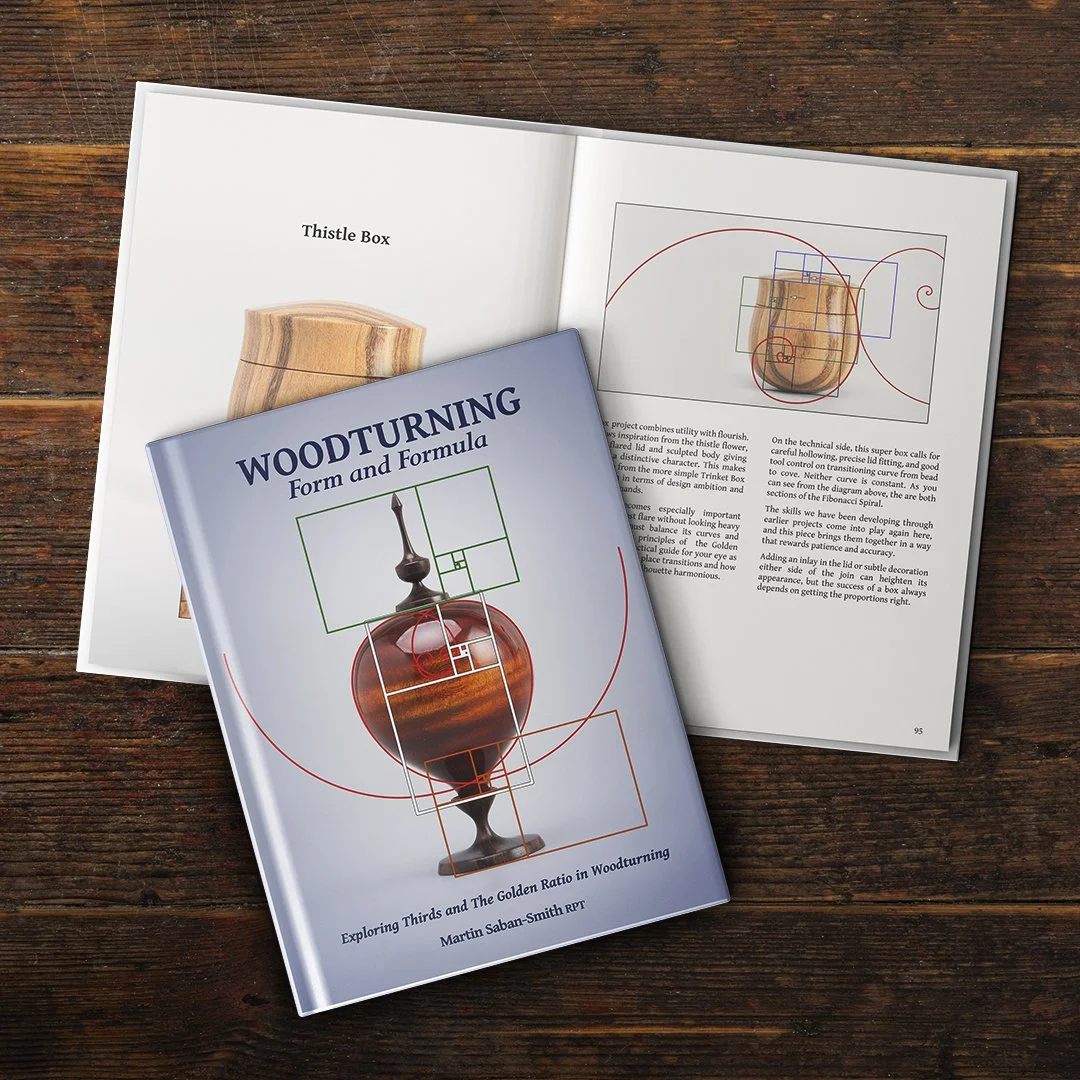
On 180 quality pages, discover how timeless design principles can transform your turning. This book makes the Rule of Thirds and the Golden Ratio simple, practical, and ready to use at the lathe.
With clear explanations, step-by-step projects, and inspiration from world-class turners, in this softback book, you’ll learn how to design and create pieces that look right, feel right, and stand out.
Woodturning is far more than good technique. It’s about proportion, balance, and form. Some pieces feel instantly “right,” others do not. This book explores the why and the how.
All copies from here are signed with a simple message.
A Maker's Mindset: 30 Lessons from the Lathe
If Form and Formula is the book about craft, A Maker's Mindset is the book about the craftsperson.
Thirty short chapters. Each one starts with something small: a moment at the lathe, a conversation in the workshop, an observation about how wood behaves — and finds its way to something larger. About patience, and focus, and why it matters to do something well even when nobody's watching. About mistakes, and what they're actually for. About what you learn when you slow down enough to pay attention.
It's not a technical book. There are no tool recommendations, no gouge angles, no advice on grits. This is the thinking that happens around the turning, the part that doesn't usually make it into instructional videos.
Written, I hope, with the kind of honesty that only comes from a decade of sawdust, miscalculations, and showing up at the lathe anyway.
Who it's for:
• Anyone who makes things with their hands
• Woodturners who've wondered why they keep coming back to the lathe
• People who find the process matters as much as the outcome
• Those who want to think more carefully about what craft actually teaches
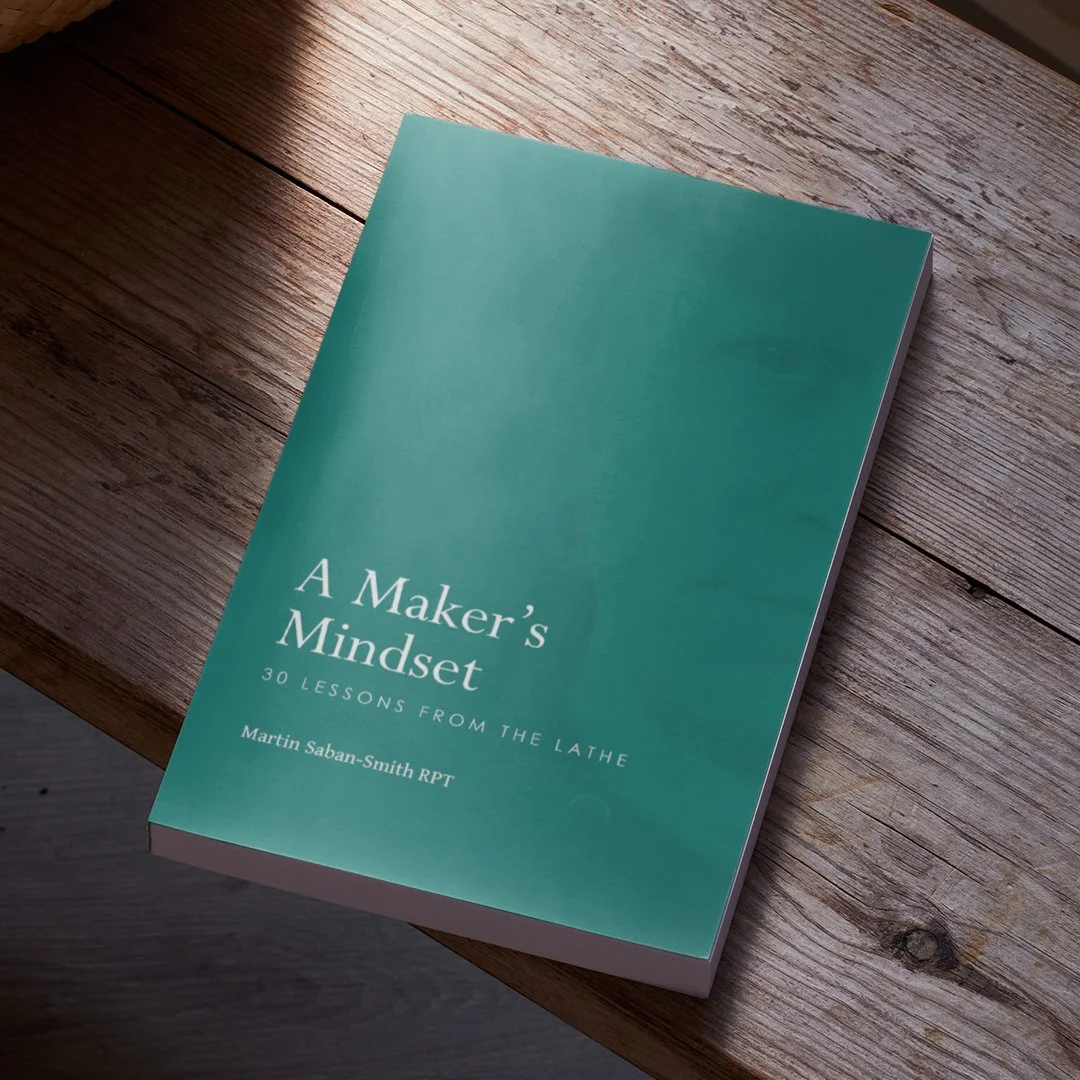
Organised into five parts, from Hands to Mind to Heart to Meaning to Legacy, these thirty lessons explore the physical foundations of craft, the creative thinking behind good work, the emotional honesty it demands, the deeper meaning it carries, and the way knowledge passes from one maker to the next. You can read it straight through, or dip in wherever draws you. Some days you need patience. Other days you need permission to begin.