
A Monday Night with Goat Willow and My Wonderful Club
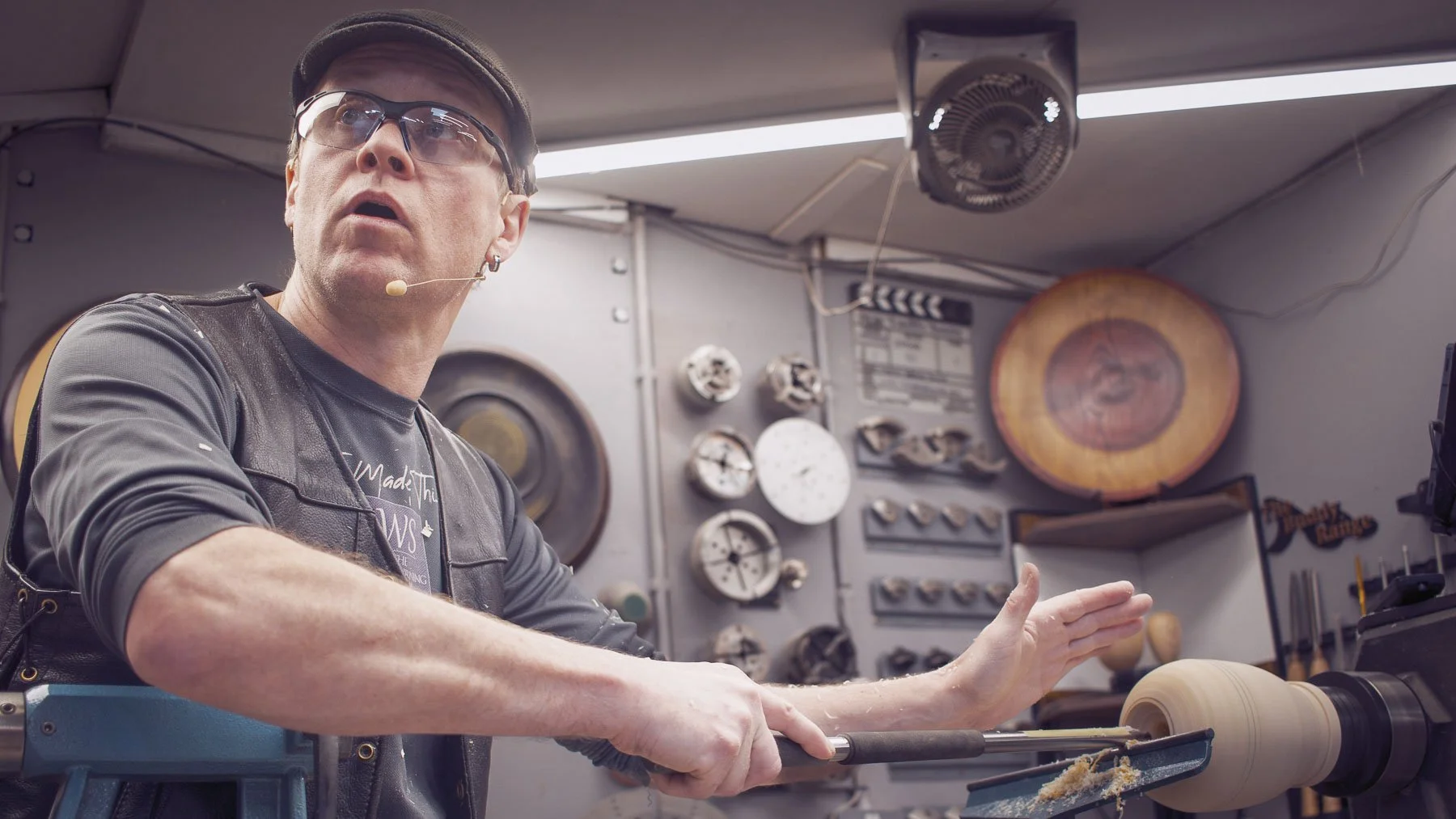
There's a particular kind of Monday evening that I've come to look forward to more than I probably let on. The workshop's set up, the camera's on, and the Zoom window fills with familiar faces from all over the UK, Europe, the US and Canada. That's one of the things I still find slightly remarkable about the Woodturning360 club. A group of people scattered across several time zones, all gathering together for a couple of hours around a lathe in Hampshire.
Terry popped in briefly from his holiday in Wiltshire on his way to something at Center Parks. Jane joined us for the first time, which is always a good moment. And somewhere in all of that, a bumblebee got into the workshop and made itself the unofficial co-host for a while.
The Goat Willow
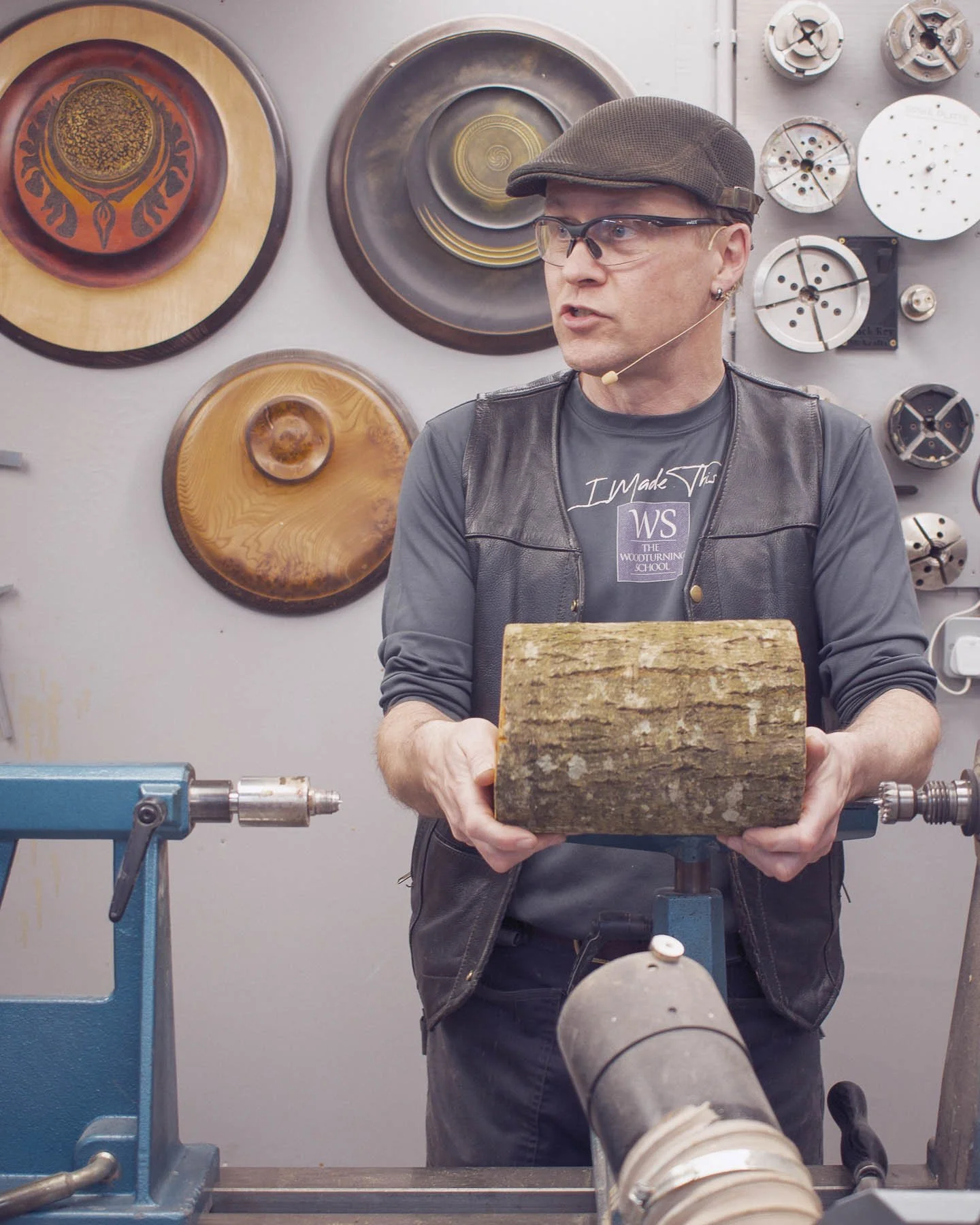
The main event was a pith-to-pith piece from a goat willow log. For anyone who hasn't worked with it, goat willow is soft, and has a habit of shedding bark. I gave the group a heads-up about that before I started. It's not dramatic, but it's the sort of thing worth knowing before a piece of bark reminds you the hard way.
Wet wood always asks you to adjust your expectations. You're not always aiming for a finished piece straight off the lathe. You're roughing out, shaping to a wall thickness that will dry evenly, and accepting that you'll come back to it in a few weeks once it's decided what shape it actually wants to be.
I trued up one end, added a tenon, and got the speed up to around 1,000 RPM with no wobble, which is always a small relief. I left a little chamfer on the tenon shoulder. It's one of those habits that costs nothing and saves you a fractured shoulder line further down the track.
The grain on this one reminded me of sycamore. Light, with a bit of character. There was some natural cracking already working its way through, which is fairly standard for goat wood with the pith left in. I talked the group through managing that with even wall thickness rather than trying to eliminate it entirely. The pith will do what the pith will do. Your job is to give it the best possible chance.
Blacksmith Drill Bits (Again)
We got onto blacksmith drill bits for starting the hollowing. The V-shaped cutting tip leaves a far easier surface to finish than a Forstner, and the swarf clears better if you use short, controlled turns of the handwheel rather than forcing it. Trevor summed it up neatly. Once you've tried them, you don't really go back.
Salt, Pepper, and a Cube
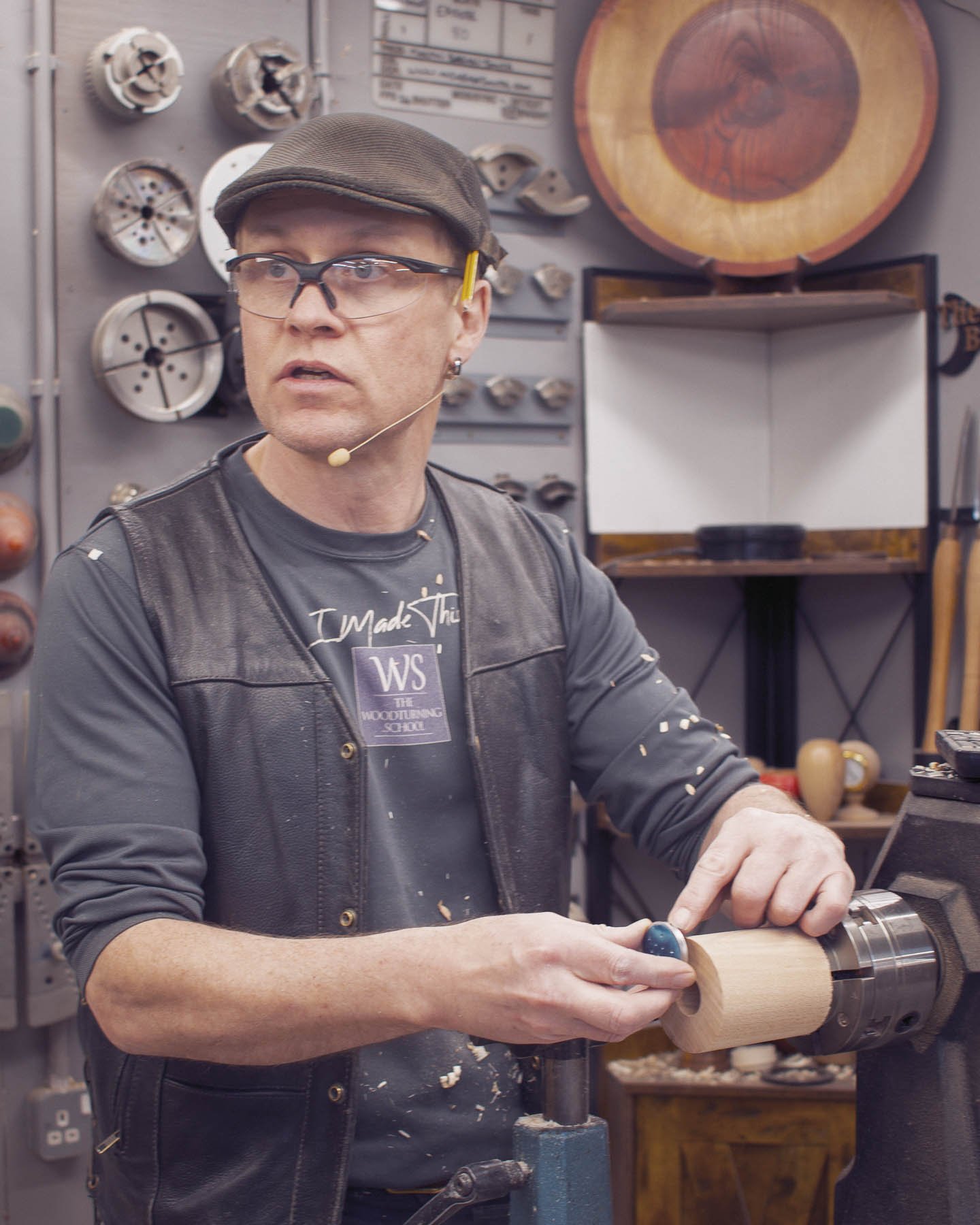
Later in the session, I shifted over to a different project, turning salt and pepper shakers from a 70mm sycamore cube. This came out of some scrap I'd been meaning to use up, which is usually how the better projects start. The lathe had opinions about switching on that evening, which took a minute to sort out, but we got there.
The shaker involves drilling right through the blank, making a recess for the top, and working through the grits from 120 up to 400 with cork-backed sandpaper blocks. Nothing fancy. Just careful, patient work. Ligia had a good question about dovetail attachments for reversing the piece, which led us into a discussion about working on the second side without losing your reference points.
What I Take Away
Sessions like this one remind me why I set the club up in the first place. It isn't really about me demonstrating a technique. It's about a group of people who genuinely like making things, sitting together for a couple of hours across continents, sharing what they've learned and asking the questions they haven't found answers to yet. The goat willow piece will sit on a shelf now for a few weeks. We'll revisit it in May and see what it's become.
If you're curious about the club, there's more information at www.woodturning360.com.
Until next time, keep your tools sharp and your tool rest close.