
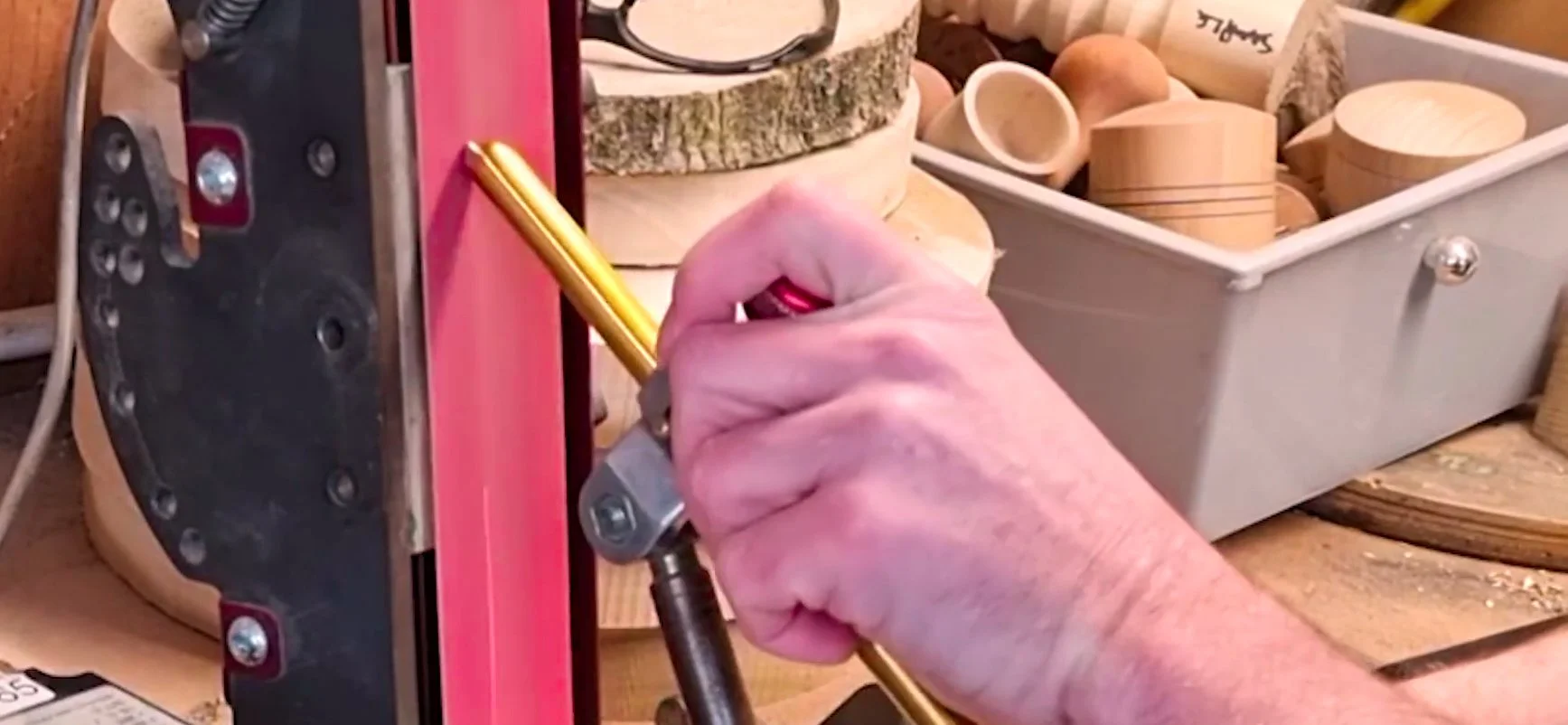
If I could give a new turner only one piece of advice, it would be this: learn to sharpen properly! A dull tool fights you. A sharp tool cooperates. The difference isn't subtle. It's the difference between struggling and flowing, between torn surfaces and clean cuts, between frustration and satisfaction.
I've lost count of how many times I've watched someone struggle with a technique, convinced they're doing something wrong, only to find that their tool was simply dull. Sharpen it, and suddenly the technique works. The problem was never their skill, it was their cutting edge.
But sharpening intimidates people. There are so many systems, so many opinions, so many arguments about angles and grits and jigs and freehand versus guided. The noise makes something simple seem complicated.
Here's what actually matters: consistency. A consistently sharpened tool at 40 degrees will outperform an inconsistently sharpened tool at the "perfect" 35 degrees. The best sharpening system is the one you'll actually use, regularly, without fuss, and can use it to put the angles on that you want to use time and again. Repeatability is the name of the game.
I sharpen constantly while turning. Every few minutes for some pieces. This isn't obsessive; it's efficient. Maintaining an edge is easier than restoring one. A few passes on the grinder keeps the tool working well. Waiting until it's dull means more grinding, more heat, more metal removal.
When I teach, I tell all my students that “If you think your tool is dull, then you are too late.” Over time, you will learn how quickly your tools dull depending on the timber you are turning, the size of the piece and of course, how good your tool presentation is.
The relationship between sharp tools and surface quality is direct. When students ask me about sanding, I often ask about sharpening first. A properly sharp tool leaves a surface that needs minimal sanding. A dull tool creates torn fibres that no amount of sandpaper can fully hide. A sharp, well presented tool is so much better than a dull poorly presented one.
In "Woodturning: Form and Formula," I talk about how finishing reveals truth. A good finish shows every flaw in your technique and every shortcoming in your tool preparation. Better to address those at the source.
When did you last sharpen your tools? Not when they felt dull – when did you last maintain them while they were still cutting well?
Class Recommendation: Every class at The Woodturning School includes sharpening instruction. We don't let you struggle with dull tools.
Book/Visit: https://www.thewoodturning.school
Watch: https://www.youtube.com/@msabansmith
Cross-Reference: Related: 'What Your Sanding Is Hiding?' on The Woodturning School blog (Tuesday 28th April)